

Documenting Disclosure: Christian Pastors, Missing Scientists, and the New Language of Contact
Why Christian Pastors and Missing Scientists Are Appearing in the Same Story

A few people reached out to me on May 5th and shared this interview of David Grusch. David discussed my work (timestamp 34:00) and mentioned the work of my friend and colleague, Dr. Brett Robinson Associate Director for Outreach for the McGrath Institute for Church Life at Notre Dame. I wasn’t surprised by Grusch’s statements, which advocated a nuanced insight into aspects of nonhuman intelligence as it is related to UFOs (UAP). I’ve spoken with him over the last few years and we have associates and friends in common. I understand his position and what he wants to accomplish. I am grateful that he has been open, for a few years now, about the harassment he’s experienced by going public about the alleged “legacy program,” or the program that probably has been around for more than seventy years, if it exists. I inadvertently and unintentionally discovered its possible existence in my early research into this topic. Believe me when I state, before 2014, I had no idea this was a thing (i.e., crash retrieval programs associated with UFOs). Whether it exists or not, it is documented publicly in my books.
We are now confronted with an alarming climate with respect to scientists whose work seems to involve the intersection of nuclear power and UFOs. Individuals such as retired Air Force Major General William Neil McCasland, NASA-affiliated engineer Monica Jacinto Reza, government contractor Steven Garcia, and Matthew Sullivan, reportedly associated with David Grusch, have increasingly entered the discussions of disclosure culture. Their disappearances, deaths, or withdrawals from public visibility are discussed intensely online. Some members of Congress and public officials have also described aspects of these cases and the broader atmosphere surrounding disclosure as suspicious or worthy of further investigation.
Historically, ufologists have always noted that credible scientists are harassed for doing this work, often by other credible scientists. I briefly spoke about Dr. James E. McDonald at the first SOL Foundation conference in 2023. Dr. James E. McDonald, a senior physicist at the University of Arizona, is the most early prominent scientist who faced significant ridicule for seriously studying UFOs during the 1960s. He argued UFOs were likely extraterrestrial, despite mainstream scientific mockery. Scientists and thinkers at the cutting edge often receive mockery for bringing their futurist science to the mainstream, but when their colleagues, who have access to the same evidence and might interpret it differently, engage in ad hominem attacks and ridicule, something other than peer review is going on. This happened to McDonald.
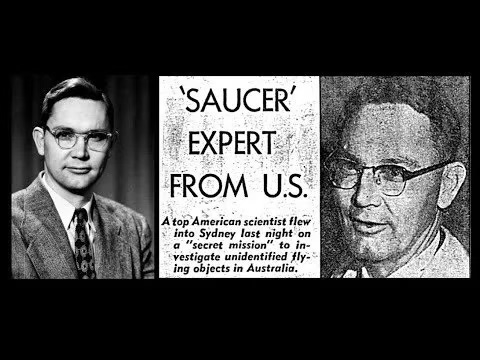
Dr. James E. McDonald was a respected atmospheric physicist at the University of Arizona who became one of the most academically prominent scientists to publicly investigate UFO reports in the 1960s. Unlike many researchers in the field, McDonald approached the subject from the perspective of atmospheric physics and argued that a small percentage of UFO cases appeared to resist conventional explanation. His outspoken advocacy damaged his standing among many colleagues and contributed to growing professional strain. In 1971 he died from a gunshot wound that was officially ruled a suicide. He was 51 years old. Perhaps there was a broader context of personal and psychological struggles that explain his death that can’t be reducible to his UFO research. I recall a quote from Jacques Vallée (but can’t find it) that we should learn lessons from the McDonald case. I could be wrong, but I think Jacques was referring to researchers being clear about the potential climate of harassment, somewhat like how deep-sea divers must be aware of the dangers of the deep-sea and ocean environment and prepare accordingly.
I remember writing the introduction to my first book about the topic in 2018 and asking myself a simple question: What do I want the public to understand most about this subject? My answer was this: almost everything people encounter about UFOs in films, television, and popular media is inaccurate or distorted. Almost everything. There are occasional fragments that ring true, but they are as rare as genuinely unexplained UFO cases themselves. Today, as I write this article, I believe that the answer to that original question has not changed.
The only reliable way to develop discernment about what may actually be occurring is to spend time seriously studying the subject for yourself—not only its contemporary manifestations, but also its long and complex history. I understand that this is difficult in a world in which you spend too much time at work and struggle to make time for important things like family. But if you really want to know, sustained attention to the historical record develops a person’s ability to interpret current events with greater clarity and caution.
Which brings me to religion. It was the Christian historical record that brought me to the study of UFOs. There are legitimate connections (some discussed elsewhere in my Substack and books). Now that discussion has been carried into contemporary culture and even secular news. The latest concerns the claims of Christian pastors who said they were approached by government insiders knowledgeable about the topic who wanted to warn pastors that a disclosure could imperil religious belief. It’s hard to pin down the actual sources, and there is a question about it actually happening, but it is making news. This is from Christian author Rod Dreher’s substack (he’s good at uncovering sources):
This reported meeting involved approximately six Christian leaders, including Bishop Alan DiDio of the Revival Nation Church, who confirmed that he was a part of the extraordinary gathering.
DiDio said: ‘It seems like a half a dozen people were gathered in an Airbnb in the mountains of Tennessee discussing an investigation that’s going on in the United States government against crimes they have committed in the process of retrieving and reverse engineering, um, technology from non-human intelligence.’
‘The meeting also went forward to discuss the propaganda plan that was in place leading up to disclosure,’ the pastor added in a March 7 livestream on YouTube.
Another reported attendee, American evangelist and podcaster Tony Merkel, added that the government officials who held the meeting expressed concerns about the impact of UFO disclosure on organized religion.
Merkel said: ‘I came in contact with these guys more than a year ago now, and I’ve been in touch with them, communicating with them, and their heart is to prepare the body of Christ for what’s coming.
‘These guys are part of, let’s just say they’re Christians in intelligence operations and they are specifically geared towards, initially, it was to gather evidence and data on what’s actually going on behind the scenes within the disclosure community.’
This, combined with Vice President J.D. Vance’s claim that he believes aliens can be understood from a demonic framework, is worth reflection. Why? Because there are people in the government who identify the current UFO files with supernatural, paranormal, and religious-like activity (two Representatives come to mind). To be fair to Vance, he tried to indicate that the topic is way more complex than the blanket statement, “it’s just demons.” However, once a person uses that word (the D word) in such a public forum, it’s going to get picked up and sensationalized. All nuance gets lost. David Grusch says that even so, rushing to the angels/demons framework might not be helpful. Is he right? How else should we approach the topic, especially as Grusch has cited me as a good source for understanding these nuances…? My take has always been that the angels/demons framework is probably the best starting point. Religion has been that unique structure that arose to interface with NHI. It’s worth revisiting what it has to say about it.
Just incredible. I think I discussed with Dr. Pasulka, some time ago, Tony's slide to the Christian fundamentalist right in his podcasting. I'm not on board with his dogmatism and I have stopped listening because I do not like what I see as the growing effort by the religious community to own/push the narrative that extraterrestrials are part of their pantheon and nothing more than angels and/or demons. This, I think, is an effort to allow their religion to survive disclosure. Perhaps being given advance notice may be an effort to give them time upfront to begin developing this narrative on a broader scale. I would be shocked if the government actually cares to bring the populace around gently to the notion of ET life and I find any concern about about crimes committed as part of the legacy program as a illegitimate excuse. Since when does our government care about whether or not they've committed crimes? Dr. Pasulka, I find you are in such an incredible position to document this correlation and growth between religion and the UFO narrative/reality. If indeed there even is one (personally I do believe), and this isn't just one really big psyop/distraction. What a time to to be here in this world on this timeline.
Respectfully, I don’t believe a word that comes out of those Pentecostal pastors’ mouths.